How to Choose a Varicose Vein Cream: A Plain-Language Guide
Written by Dr. Jonathan Reeves · Medically reviewed by Dr. Claire Dubois

Walk into any pharmacy and you will find shelves of creams, gels, and serums marketed for varicose and spider veins. Some are well-formulated with established botanical ingredients; others rely on vague claims and minimal active content. This guide cuts through the noise with a practical framework for evaluating what is in a product, how to apply it correctly, and what results are realistically achievable.
What to Look for in a Varicose Vein Cream
The most important step in choosing any topical leg product is reading the ingredients list — not the front-of-pack claims. A good varicose vein cream should contain at least two or three botanicals with a documented track record in vein and skin care, and should be transparent about what each one does.
Look for the following markers of quality:
- Named botanical extracts rather than vague references to "plant extracts."
- A recognizable base — a cream, gel, or emulsion that is appropriate for daily skin use. Heavily fragranced products or those with many potential allergens are worth approaching with caution if your skin is sensitive.
- Clear usage instructions — twice daily application with upward massage is the standard guidance, and any credible product will specify this.
- Honest labeling. In most markets, topical products for varicose veins are classified as cosmetics, not medicines. Any product that claims to "cure," "remove," or "treat" varicose veins from the outside is using language that oversteps what topical cosmetics can deliver — and may be a red flag for the product's overall credibility.
Key Botanical Ingredients in Varicose Vein Creams
| Ingredient | Primary Role | Notable Effect |
|---|---|---|
| Horse chestnut extract | Vascular support | Supports vein-wall integrity; eases heaviness |
| Troxerutin | Bioflavonoid / vascular wall care | Maintains capillary structure; soothes redness |
| Menthol | Cooling sensation | Immediate relief of burning and throbbing |
| Caffeine | Microcirculation support | Reduces puffiness; supports surface drainage |
| Chamomile extract | Anti-inflammatory / soothing | Calms irritated skin over affected veins |
| Panthenol (B5) | Moisturization / barrier repair | Improves skin softness and ingredient absorption |
| Nettle extract | Mineral-rich tonic | Traditional circulatory support |
| Red pepper extract | Warming agent | Stimulates local blood flow |
| Wormwood extract | Anti-inflammatory tonic | Soothes and tones skin surface |

Key Botanical Ingredients and What They Do
Below is a guide to the most commonly cited active botanicals in vein-care creams. No single ingredient does everything, which is why well-formulated products combine several complementary actives. The table at the end of this section summarizes them for quick reference.
Italian horse chestnut extract (Aesculus hippocastanum) is the most researched botanical in this category. It has been studied for its potential to support vascular tone — particularly the integrity of capillary walls — and is associated with reduced feelings of leg fatigue and heaviness.
Troxerutin is a semi-synthetic bioflavonoid derived from rutin (found naturally in plants like buckwheat and citrus). It is included in topical formulas for its role in maintaining vascular wall integrity and reducing the appearance of surface redness associated with spider veins.
Menthol delivers immediate, noticeable relief — its cooling sensation is pharmacologically explained by its activation of TRPM8 cold receptors in the skin. For tired, burning legs, this effect is one of the most valued aspects of any topical leg product.
Caffeine is widely used in cosmetics for its ability to support microcirculation and address puffiness. Applied topically, it helps reduce the swollen, waterlogged feeling that can accumulate in ankles and lower legs by the end of the day.
Chamomile flower extract brings anti-inflammatory and soothing properties to the skin over and around affected veins, which can become irritated and dry over time. Panthenol (pro-vitamin B5) acts as a humectant that improves skin barrier function and softness, enhancing the absorption of other active ingredients.
Nettle extract is rich in minerals and has a traditional role in topical products aimed at supporting circulation. Red pepper extract (capsaicin-family) provides a gentle warming sensation that promotes local blood flow. Wormwood extract rounds out many botanical formulas with anti-inflammatory and mild tonic properties.
Varicose Vein Cream: Do's and Don'ts
| Do's | Don'ts |
|---|---|
| Apply from ankle to knee (upward) | Massage downward against venous flow |
| Use twice daily, morning and evening | Apply once and expect rapid results |
| Look for named botanical actives | Trust products with only vague "plant extract" labels |
| Store below 25°C, away from sunlight | Leave the tube in a hot car or on a windowsill |
| Combine with movement and elevation | Expect cream alone to replace lifestyle habits |
| Check the PAO symbol for freshness | Use a product well past its period-after-opening date |
How to Apply a Leg Cream Correctly
Even the best-formulated cream delivers limited results if it is applied incorrectly or inconsistently. The following technique maximizes absorption and adds a small but real circulatory benefit:
- Cleanse and dry the skin first. Clean skin absorbs active ingredients more readily. After a shower is an ideal moment.
- Dispense a small amount — roughly a pea-sized dollop per leg. More product does not mean faster results; it mainly means wasted formula.
- Apply from ankle to knee. Always work upward, in the direction of venous return. Start at the ankle, massage in circular motions, and work gradually toward the knee. Never massage downward — this works against the natural direction of blood flow.
- Use light, not firm, pressure. Gentle strokes with fingertips are appropriate. Avoid pressing hard directly over raised, bulging veins.
- Allow the cream to absorb before dressing. One to two minutes is usually sufficient, especially with gel-textured products.
- Apply twice daily — morning and evening — for consistent results. Once-daily application is better than nothing but delivers a slower, less noticeable improvement in skin comfort.
For a full discussion of the lifestyle habits that pair best with topical care, see our guide on natural ways to support leg wellness.
Storage and Shelf Life
Botanical ingredients can degrade if stored improperly. Keep your leg cream away from direct sunlight and heat — a bathroom cabinet or bedside drawer works well, but a windowsill or car glove box does not. Most formulas are stable at room temperature (below 25°C / 77°F).
Check the period-after-opening (PAO) symbol on the packaging — the small open-jar icon followed by a number and "M" (months). This tells you how long the product is effective after first opening. Using a cream beyond its PAO doesn't necessarily make it unsafe, but the active botanicals may have degraded to the point where the product is less effective.
Realistic Expectations
Setting honest expectations protects you from disappointment and helps you evaluate whether a product is working for you.
A topical cosmetic cream applied twice daily will, for most people, produce:
- Noticeable improvement in the sensation of tired and heavy legs — often within the first few applications (largely thanks to menthol and the massage action).
- Gradual improvement in skin texture and hydration over two to four weeks of consistent use.
- Improvement in the surface look of the skin over affected areas over four to eight weeks.
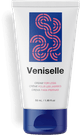
A topical cream will not structurally change the size or course of existing varicose veins, and it is not a substitute for medical treatments (sclerotherapy, laser therapy, or surgery) when those are indicated. Think of it as an important, enjoyable part of your daily leg-care routine — one component of a broader approach that also includes movement, elevation, and hydration. Veniselle leg cream is designed with exactly this philosophy in mind.
Give Your Legs the Care They Deserve
Veniselle is a topical leg cream formulated with botanical extracts — horse chestnut, chamomile, menthol, and more — to soothe tired, heavy legs and support the look of skin over varicose and spider veins. Try it as part of your daily leg-care routine.
Find Veniselle in Your Country →Editorial team


Frequently asked questions
Can a cream make varicose veins disappear?
No topical cosmetic cream can structurally remove varicose veins. Creams can soothe the skin over affected veins, ease the sensation of heaviness and fatigue, and improve the surface look of the skin — but changing the course of a dilated vein requires medical procedures (such as sclerotherapy or laser treatment).
How long should I use a varicose vein cream before deciding if it works?
You may notice a cooling, soothing sensation within the first few uses. For meaningful improvement in skin texture and the sensation of leg comfort, give a product at least four weeks of consistent twice-daily use before evaluating whether it is right for you.
What's the difference between a cream and a gel for varicose veins?
Gels tend to absorb faster and feel lighter, making them popular for daytime use or in warmer weather. Creams provide more moisturization, which can be better for dry or mature skin. The active botanical ingredients can be equivalent in both; the choice is largely one of texture preference.
Is it safe to use a leg cream over broken or irritated skin?
Generally, avoid applying any topical product to broken, bleeding, or actively inflamed skin. If you have eczema or dermatitis near varicose veins, check with your dermatologist before introducing a new product. Intact, dry, or mildly sensitive skin is appropriate for standard topical leg creams.
Can I use a varicose vein cream during pregnancy?
Pregnancy is one of the most common triggers of varicose veins. However, the safety of specific botanical ingredients varies during pregnancy — horse chestnut extract in particular should be used with caution. Always consult your midwife or obstetrician before introducing any new topical product during pregnancy.
Do I need to stop using the cream once I see improvement?
No. The benefits of consistent topical leg care — soothed skin, reduced sensation of heaviness, supported skin texture — are maintained through continued use. Think of it as part of your ongoing leg-care routine rather than a short course of treatment.
Related guides

Varicose Veins: What Causes Them and What to Watch For
Read more →
How to Support Your Legs Naturally When You Have Varicose Veins
Read more →
Tired, Heavy Legs: Why They Happen and How to Find Relief
Read more →